

What 47 Years in the Plaster Trade Taught Me
After 47 years of working hands-on with lime, sand, and hair plaster, one lesson stands above the rest: you cannot buy back the time that's already built into your walls. To understand why that matters, it helps to know exactly what historic plaster is, what's happened inside it since the day it was applied, and why nothing on the market today can shortcut that process.
What is Historic Plaster, Exactly?
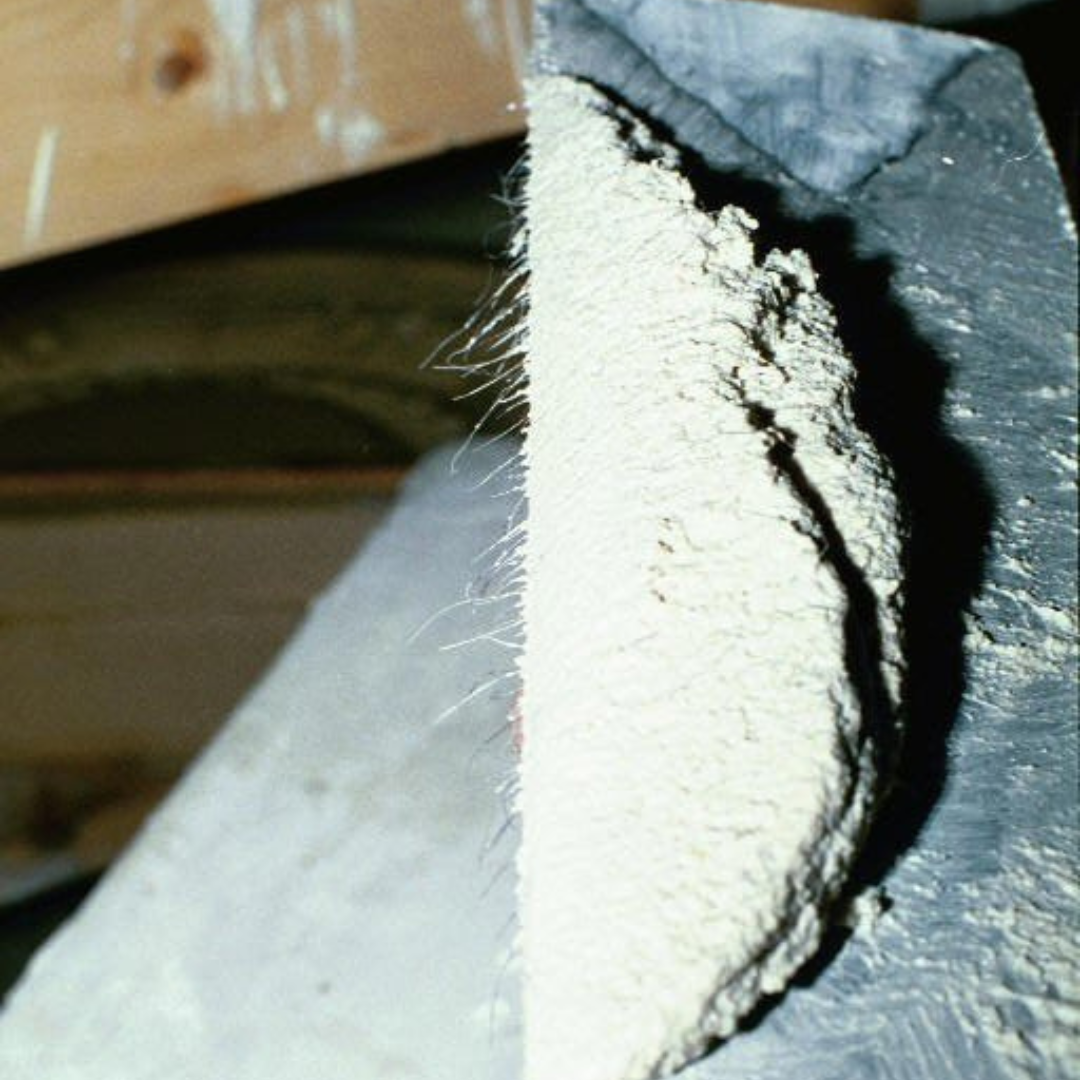
"Historic plaster" generally refers to the plaster used throughout the United States up until the 1920s, and in some regions into the 1930s. It's a mixture of sand, lime putty, and fiber, usually cattle hair, though vegetable fiber like hemp shows up occasionally.

The cementitious portion of that mix, the lime putty, doesn't cure the way modern materials do. When it's exposed to atmospheric carbon dioxide in a humid or damp environment, it slowly carbonates into calcium carbonate, essentially a form of limestone. That transformation happens over decades, which is where the old saying comes from: lime plaster is "young" at 100 years.
The strength of that set depends on how much surface area of the lime is exposed to CO2 as moisture leaves the wall. Curing takes place gradually over time, and the older the plaster, the more of its calcium hydroxide has converted to calcium carbonate.
Here's the point that matters most: you cannot replace historic plaster with anything as good or better, because you cannot compress the timeframe that made it what it is.

Why Modern Materials Can't Compete
Gypsum Wallboard
Gypsum wallboard (drywall) is engineered to last for decades in modern construction. It's a quick fix for historic homes. It's a material of limited duration, largely because it can't move with a historic home the way lime plaster can. Veneer plaster falls into the same category: it's no more "real" plaster than wood veneer is real wood.
Modern Gypsum Plaster
Modern gypsum plaster is durable, but it's hydraulic, meaning it sets through a chemical reaction with water rather than through the slow atmospheric carbonation that shapes lime plaster. As calcium sulfate crystals form, each one releases heat and triggers the next, creating a crystallization cascade that continues until the material is fully set.
That cascade mechanically and chemically locks every crystal to its neighbor. The result is a rigid material, which is exactly the wrong property for a historic home that's designed to flex with seasonal movement, moisture changes, and settling.
Modern Lime Plaster
Even a historically accurate lime plaster mix, arguably the best available substitute, is still missing the one ingredient that can't be manufactured: centuries of carbonation. Time, not formulation, is what determines whether your plaster should be saved.
It's worth noting that this isn't just a preservation talking point. A series of ads for Los Angeles real estate listing for a historic home ran the tagline "there is no gypsum wallboard, only original plaster," treating original plaster as a premium selling feature. Keeping your historic plaster in good repair protects real, measurable home value, and for most homeowners, their house represents a significant share of their net worth.
The Weight That Holds Your House Together
A story-and-a-half to two-story Cape-style home can contain 8 to 15 tons of lime plaster. That weight, distributed across the structure, presses down on the foundation and helps hold the entire building solid against traffic vibration, wind, rain, and everyday environmental stress. It's part of why these homes have stood for generations.
Gypsum wallboard weighs roughly 35% less. Strip out that mass and replace it with a lighter material, and you allow the structure to rack more than it was ever built to. Making a 100-year-old building 35% lighter and expecting it to perform the same way for another century simply isn't realistic.
Structural Integrity Depends on How You Repair It
Historic homes are built from inherently flexible components: masonry or stone foundations, old-growth timber framing, and wood lath articulated to that framing. Lime plaster's relative flexibility lets the whole system move together as the weather changes, the ground shifts, moisture levels swing, and traffic vibration passes through. Modern "solutions" that don't account for this flexibility don't add long-term value to a repair. They tend to fall into three categories, and all three come with a catch.
1. Permanent Screws and Washers
Screws and washers can crush the plaster, and they create a narrow, rigid point of attachment that allows no movement. They also need to be covered afterward, which requires a separate skill set.
2. Joint Tape (Mesh or Paper)
This method relies on joint compound, tape, and ultimately a few mils of paint to hold everything in place. In a building that's already lasted over a century, depending on a thin paint film feels temporary at best, and it still needs to be finished and covered.
3. "V-ing Out" the Crack
This is the big one. Traditionally, lime plaster was mixed then haired shortly before application, because active lime begins to degrade hair fiber over time (leave hair in lime putty for six months and it dissolves completely). Mixed in just before application, though, the lime actually etches the hair, roughening its surface so the plaster grips it tightly within the matrix.
A century-plus later, that hair, spaced roughly every 1 to 2 millimeters in a random pattern, is still doing its job. When plaster cracks, even hairline cracks an eighth to a sixteenth of an inch wide, that fiber still has integrity and is still providing internal strength.
When a crack is "V'd out" to prepare it for filler, that fiber gets cut. The plaster is weakened, not stabilized, and there's nothing you can pack into that opened channel that will actually prevent it from re-cracking. Any fill material will eventually fail, which means the crack still needs to be taped or covered; more work, for a worse structural outcome than when you started.

The Better Approach: Adhesive Reattachment
Adhesive reattachment takes a fundamentally different path. Instead of cutting into the plaster or covering the surface, it bonds the plaster back to its original wood lath, using that lath (the strongest reinforcement already present in the wall) to do the structural work. Nothing has to go on the surface, so the repair isn't riding on a thin paint layer to hold it together.
Plaster Magic® was developed specifically for this. It's the only repair method designed to address the structural weakness in cracked plaster, separation from the lath, while working with the plaster's own strengths: its fibrous matrix and its bond potential with the original lath.
It's also not a conventional construction adhesive. Standard adhesives use inexpensive fillers to cut cost, which reduces flexibility, and typically require surfaces to be completely clean, dry, and free of dust and debris (the same limitation that applies to PVA bonding agents). Plaster Magic® is formulated specifically for the real-world conditions found between aged plaster and wood lath. As one senior editor at a national old-house magazine put it years ago, Plaster Magic® delivers as promised.
Two Separate Jobs: Stabilize, Then Finish
Plaster repair really breaks down into two distinct tasks, and it's easy to conflate them:
-
Stabilization: In roughly 99% of cases, historic plaster doesn't need to be replaced, just reattached. Doing this first, and doing it with the right method, takes less time, less mess, and less money than removal and replacement.
-
Cosmetics: Once the plaster is structurally stabilized, the finish work, filling, sanding, painting, is entirely up to you and your desired look.
Skipping straight to cosmetic repairs without stabilizing first is how so many plaster repairs fail. Fix the structure, and the finish will actually last.
The Bottom Line
Historic plaster isn't just old material clinging to your walls, it's a load-bearing, century-in-the-making system that gypsum board and modern plaster can't replicate, no matter how well they're installed. The fastest, most cost-effective path to a lasting repair is to stabilize what's already there instead of cutting it out.
Have questions about your plaster, a crack you're not sure how to handle, or where to start? We're here to help you.
Reach us at info@plastermagic.com.

Leave a comment